2026 Quarter: Who Approved This?
Collectors are not waiting for coins to enter circulation.
Debates regarding the 2026 quarter design are already occurring within the numismatic community.
This specific numismatic series commemorates the 250th anniversary of the founding of the United States.
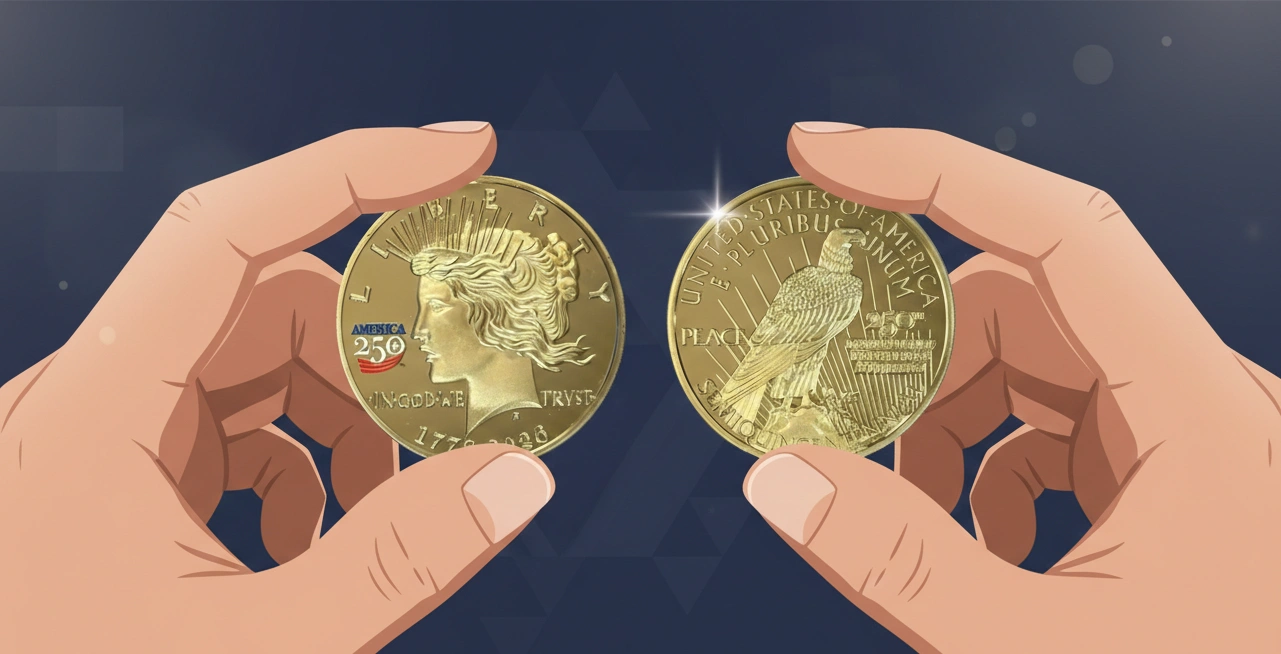
The Circulating Collectible Coin Redesign Act of 2020 regulates the issuance of these coins.
Federal law mandates that the US Mint produce five distinct reverse designs for the quarter during the 2026 calendar year.
Legislative Framework and Approval Process
State protocols strictly govern the image selection process for United States coinage.
Final design decisions rest with the Department of the Treasury, acting upon recommendations from two primary advisory bodies.
One body is the Commission of Fine Arts (CFA).
The Citizens Coinage Advisory Committee (CCAC) serves as the second influential entity.
During 2024 and 2025, these departments reviewed dozens of sketches submitted by artists from the Artistic Infusion Program (AIP).
Artists must adhere to rigid technical specifications when developing these conceptual designs.
Organization | Role in Process | Evaluation Criteria |
US Mint | Die manufacturing and striking | Technical suitability for mass production |
CFA | Design recommendation | Aesthetic value and national symbolism |
CCAC | Design recommendation | Numismatic significance and historical accuracy |
Secretary of the Treasury | Final approval | Compliance with federal legislation |
Specifications of 2026 Quarters
All standard circulation coins will maintain traditional physical parameters.
The weight of the coin is established at 5.67 grams.
The diameter of the disc measures 24.26 millimeters.
Planchet thickness is set at 1.75 millimeters.
Standard circulating coins consist of a copper-nickel clad composition on a pure copper core.
Collector editions involve the use of .999 fine silver.
Production will be distributed among the mint facilities in Philadelphia (P), Denver (D), and San Francisco (S).
Approved and Proposed Designs
An updated portrait of George Washington will be featured on the obverse of the 2026 program.
This portrait is based on the 1932 work by sculptor Laura Gardin Fraser.
Reverse designs must reflect historical events of 1776 and the subsequent evolution of the nation.
Approved sketches include depictions of the Declaration of Independence and allegorical symbols of liberty.
The CFA frequently rejected options containing excessive detail.
Small elements on sketches create difficulties during high-speed striking processes.
Relief complexity directly influences the operational lifespan of the dies.
Key Themes for 2026 Reverses
The signing of the Declaration of Independence in Philadelphia
Symbolism of the thirteen original colonies
Classical-style Allegory of Liberty
Tools and instruments of the Enlightenment era
Cartographic outlines of the USA as of 1776
Investors analyze the potential of future releases based on data from previous series.
The 50 State Quarters and America the Beautiful series demonstrate varying price dynamics.
Statistics indicate an annual value increase of 15–20% for coins graded MS67 and higher.
Rare mint errors can increase the asset value by a factor of ten or more.
Coin Type | Condition | Realized Price | Sale Year |
1932-D Washington Quarter | MS66 | $143,750 | 2008 |
1932-S Washington Quarter | MS66 | $45,500 | 2020 |
1962 Washington Quarter | MS67+ | $26,400 | 2022 |
1999-P Delaware (Spitting Horse) | MS66 | $800 | 2021 |
The price for standard coins in average condition (AU/UNC) declines by 5% annually due to massive mintages.
Mintage for each 2026 design is projected to exceed 400 million pieces.
Excess supply limits price appreciation for the common market segment.
Price Dynamics of Silver Editions
Silver Proof Sets show a direct correlation with the spot price of the metal.
During periods of precious metal volatility, set values fluctuate within a 12% range per quarter.
The numismatic rarity premium for 2026 silver issues is expected at 35% above the metal value.
Interest in modern issues declined by 8% in terms of active buyers during the 2015–2020 period.
The 2026 program aims to restore market performance through historical significance.

Criticism of the Design Selection Process
Many professional numismatists point to excessive bureaucracy during image approval.
Advisory committees often favor simplified compositions.
Simplifying the visual narrative helps prevent defects during mass production.
However, the absence of deep relief reduces the appeal of the coin for serious collectors.
The transition to computer modeling instead of traditional hand-sculpting alters the character of the coin's surface.
Decade | Average Design Mintage | Percentage of Coins in MS68 Condition |
1990s | 600M | 0.05% |
2000s | 450M | 0.08% |
2010s | 350M | 0.12% |
2026 (Forecast) | 420M | 0.10% |
The relative scarcity of high-quality specimens drives the secondary market.
Certification by PCGS or NGC remains a mandatory requirement for securing high prices.
Ungraded coins typically trade at values close to their face value.
Schedule of Key Dates for the 2026 Program
January 2025: Completion of final design selection
June 2025: Commencement of master die production
January 2026: Official release of the first quarter in the series
December 2026: Conclusion of striking for the final program design
March 2027: Publication of final mintage data
Condition Statistics for Modern Coins
Market research indicates a gradual improvement in striking quality.
Finding a coin in MS68 condition within circulation was nearly impossible in the 1980s.
Modern equipment ensures a more consistent output.
The proportion of coins graded MS66 and higher is approximately 15% of the total volume produced for collector sets.
For circulation-strike coins, this figure does not exceed 1%.
Mechanical damage occurring during transport in mint bags reduces collective value by 90% within the first days of release.